By Joseph Bryson April 14, 2026
Walk into almost any coffee shop, pharmacy, or grocery store today and you will notice something that would have seemed remarkable just a decade ago. People are paying for things by tapping their phone or watch against a small terminal, waiting half a second for a beep, and walking away. No wallet, no cash, no fumbling for the right card. The transaction is done before the next customer has even stepped forward. This shift in payment behavior has moved faster than most small business owners anticipated, and it has created a new set of expectations among customers that extend into every retail environment, including the neighborhood bakery.
A customer who taps to pay for their morning coffee on Monday does not suddenly want to dig for cash when they are buying a sourdough loaf on Saturday. They expect the same frictionless experience everywhere they spend money, and when a business cannot deliver it, that friction registers, even if the customer does not say anything about it. Contactless payment for bakeries is no longer a forward-thinking upgrade. It is a present-day customer expectation, and understanding how to meet it well is one of the more straightforward investments a bakery owner can make in the experience they deliver.
How Customer Payment Habits Have Changed
The shift toward contactless payment did not happen overnight, but it accelerated dramatically over the past several years and the behavioral changes it produced appear to be permanent. Surveys of consumer payment preferences consistently show that a growing majority of shoppers now prefer contactless methods over cash or traditional card insertion, and the preference is particularly strong among younger demographics who have grown up with digital wallets and expect seamless payment experiences as a baseline rather than a bonus. For bakeries specifically, the customer profile has shifted in ways that make contactless capability increasingly important. The morning rush customer who is picking up pastries and a coffee on the way to work has their phone in their hand already.
Asking them to put it away, find their wallet, and insert a chip card adds thirty seconds and several steps of friction to a transaction they wanted to complete in moments. Thirty seconds might not sound significant, but across a busy morning service with a line of customers, it compounds quickly into longer queues, slower throughput, and a checkout experience that feels dated relative to what customers encounter everywhere else.
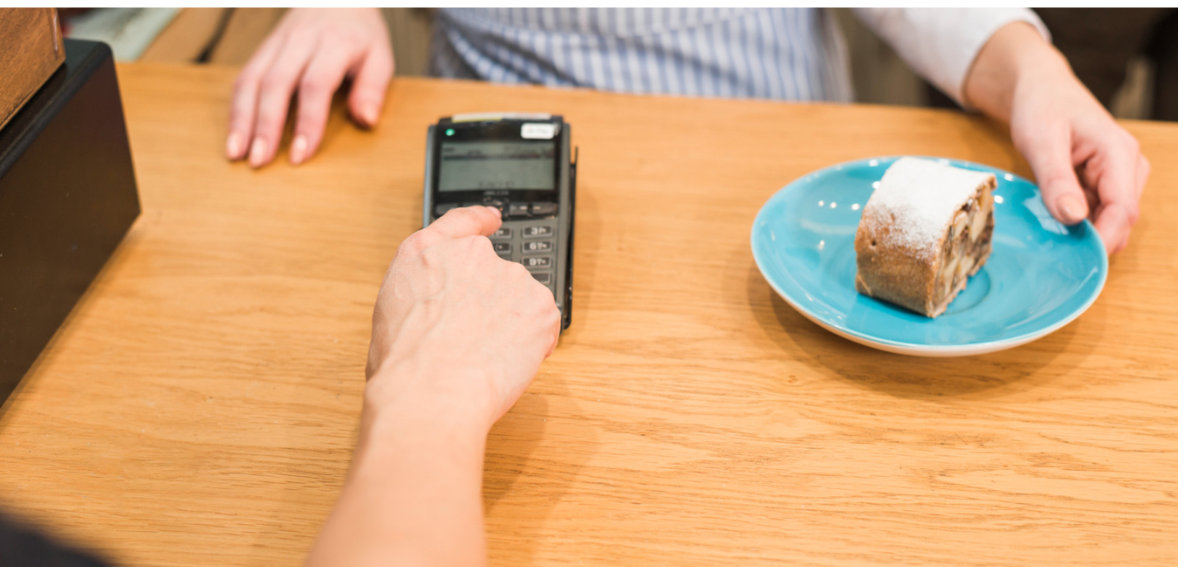
The tap to pay bakery experience, where a customer holds their card, phone, or watch near the terminal and the transaction completes instantly, matches the pace and simplicity that modern customers have come to expect, and delivering it consistently is part of what makes a bakery feel current and professionally run.
What Contactless Payment Actually Involves
There is sometimes confusion among small business owners about what contactless payment actually means in practical terms, so it is worth being clear about what falls under this category and what the technical requirements are. Contactless payment is built on NFC technology, which stands for near-field communication, a short-range wireless protocol that allows two devices to exchange data when they are brought within a few centimeters of each other.
When a customer taps a contactless card, a smartphone with Apple Pay or Google Pay, or a smartwatch against a payment terminal, the NFC chips in both devices communicate to complete the transaction securely and almost instantaneously. NFC payments food business owners need to support are not limited to one type of device or card. Modern contactless terminals accept all of these methods through the same hardware, which means a single compliant terminal handles a customer paying with a Visa contactless card, a customer using their iPhone with Apple Pay, a customer tapping an Android phone with Google Pay, and a customer using a Samsung Galaxy Watch, all through the same interaction.
The terminal needs to be NFC-enabled, which most modern payment terminals are, and it needs to be configured correctly by your payment processor to accept contactless transactions. For bakeries that have been operating with older terminals that only support chip insertion or magnetic stripe, upgrading to an NFC-capable device is typically a straightforward process through their existing payment processor, and the cost of the hardware is usually modest relative to the operational benefit it delivers.
Digital Wallets and Why They Matter for Bakeries
The rise of digital wallets has been one of the most significant developments in consumer payment behavior over the past five years, and understanding what they are and why customers prefer them helps explain why supporting them is increasingly important for a digital wallet bakery that wants to meet contemporary customer expectations.
A digital wallet is an application on a smartphone or wearable device that stores payment card information securely and allows the user to make payments without the physical card. Apple Pay, Google Pay, and Samsung Pay are the most widely used examples, though various banks and financial institutions also offer their own wallet products. Customers who use digital wallets tend to be loyal to them precisely because of how seamlessly they work. The phone is already in their hands. They double-tap the side button or hold it near the terminal and authentication happens via Face ID or fingerprint, which is both faster and more secure than entering a PIN.
The transaction completes in under two seconds. For the customer, there is nothing to fumble with, nothing to forget, and no concern about their card details being exposed because digital wallets use tokenization, meaning the actual card number is never transmitted during the transaction. For a digital wallet bakery that wants to create the kind of effortless checkout experience that keeps customers coming back, accepting these payments fluently is part of the picture. A terminal that struggles to read contactless payments, or staff who are uncertain how to handle a customer tapping their phone, undermines the experience that digital wallet users have come to expect.
The Operational Benefits Beyond Customer Experience
The case for contactless payment bakery investment is not just about meeting customer expectations, though that alone would be sufficient justification. There are genuine operational benefits that make contactless payments a better system for the bakery itself, not just for the customer. Transaction speed is the most immediate. A contactless transaction takes roughly half the time of a chip card transaction and significantly less time than a cash transaction that requires counting change. During a morning rush when every second at the register matters, this difference in transaction speed translates directly into throughput.
More customers served per hour, shorter queues, and a less pressured checkout environment for staff are all downstream benefits of faster individual transactions. Hygiene is another operational consideration that became particularly salient in recent years and has remained relevant to many customers. Contactless payments eliminate the need for customers and staff to handle cash, which is one of the most contact-intensive elements of a traditional checkout. For a food business where cleanliness and hygiene standards are already a priority, removing the cash handling element from checkout reduces one more contamination vector and aligns with the care around food safety that good bakeries already demonstrate throughout their operation.
Cash handling also carries operational costs that are easy to overlook because they are embedded in routine processes rather than appearing as discrete line items. Counting the till at the start and end of shifts, handling banking runs, managing discrepancies, and the time cost of transactions that require making change all represent real labor and operational overhead that decreases as the proportion of cashless transactions increases.
Choosing the Right Payment Terminal for Your Bakery
Not all payment terminals are created equal, and choosing the right hardware for a bakery environment involves considerations beyond simply whether the device supports NFC payments. The physical environment of a bakery is specific in ways that matter for terminal selection. Flour dust, moisture from baking, and the general busyness of a food production and retail environment mean that terminals need to be reasonably robust. Counter space is often at a premium, particularly in smaller artisan bakeries where the retail counter is compact and every inch is occupied by display cases, packaging supplies, and operational necessities.
Choosing a terminal with a compact footprint and a durable build quality is more practically important in a bakery than in a retail environment where the counter is larger and the conditions are drier. For bakeries with a queue-based service model where customers wait in line and are served at a single counter, a countertop terminal that presents clearly to the customer for tapping and PIN entry is typically the right choice. For bakeries that operate more of a cafe-style service where orders are taken at the table or at multiple points in the space, a portable handheld terminal that staff can bring to the customer enables a tap to pay bakery experience that matches the service style.
Some modern terminal systems also combine payment processing with POS functionality, allowing the bakery to manage orders, track inventory, and process payments through a single integrated system rather than operating separate hardware for each function, which can simplify the overall technology setup considerably.
Integrating Contactless Payments With Your POS System
For bakeries that already operate a POS system, integrating contactless payment capability with that existing system is an important consideration that affects how smoothly the checkout process works in practice. A payment terminal that operates independently from the POS requires staff to enter the transaction amount manually on the terminal after it has been rung up on the POS, which creates an extra step and introduces the possibility of keying errors where the terminal amount does not match the POS amount.
A payment terminal that is integrated with the POS receives the transaction amount automatically when the order is completed, so the customer is simply prompted to tap or insert, and the payment confirmation flows back into the POS record without any manual intervention. This integration is worth prioritizing when choosing or upgrading payment hardware, because the operational efficiency gain is real and the error reduction is meaningful.
Most modern cloud-based POS systems used in bakeries and food retail, including popular options like Square, Lightspeed, and Toast, offer integrated payment terminals that support NFC payments food business owners need, and choosing hardware from within those ecosystems typically ensures the smoothest integration. For bakeries on older or more legacy POS systems, it may be worth evaluating whether the overall system is due for an upgrade alongside the payment terminal, since the combination of a modern POS and integrated contactless payments creates a significantly more capable and efficient operational setup than updating one component without the other.
Training Staff to Handle Contactless Transactions
Technology is only as effective as the people operating it, and one of the practical dimensions of implementing contactless payment bakery capability is making sure your team is confident and fluent with the new system. For most staff, contactless payments are already a familiar part of their personal lives and the learning curve is minimal. But there are specific scenarios that require clear guidance to handle consistently.
Occasionally, customers might experience problems making the contactless payment go through because of the customer’s improper use, such as holding the phone or credit card in the wrong position or removing it from the terminal too quickly. It may also require the authentication process from the customer’s digital wallet before accepting the transaction. A staff member knowledgeable in guiding a customer in retrying the contactless payment or suggesting the customer use a different form of payment if the process is experiencing issues does so in a manner that prevents customers from feeling out of place or delaying the checkout lines. There are customer questions a knowledgeable staff member can answer.
Some of the older customers, especially, are wary of contactless payments due to uncertainty of security. Customers might want to inquire about whether their contactless payment will be secured, just like a chip transaction, or if using a digital wallet adds an extra step.
Addressing the Security Concerns Around Contactless Payments
Security is a legitimate consideration for both bakery owners and their customers when it comes to contactless payment, and addressing it directly rather than glossing over it is the right approach. The most common concern among customers is whether a contactless card can be read without their knowledge, a fear fueled by occasional media coverage of so-called card skimming through NFC. In practice, this risk is extremely low for several reasons.
NFC technology involves both parties being close to each other within a few centimeters. This makes accidental or unintended reads almost impossible. Each transaction made using this system necessitates the user presenting their device or card manually. Moreover, the security measures taken by the card networks are robust enough to prevent fraudulent transactions in real time regardless of the form of payment used. In the case of digital wallets, the security measures taken are more stringent. This is due to the use of dynamic tokenization in the payments. It ensures that no real card information is ever sent out to the merchant’s site. Instead, unique tokens are generated for every transaction. These cannot be used for other purchases.
In terms of protecting bakery business owners from their risk, choosing a reliable payment processor with adequate encryption measures and compliance with PCI DSS is the primary starting point. Most reputable payment processors in the market already comply with these basic criteria. Contactless payment solutions have security levels comparable to those of card payments. They surpass the security offered by cash transactions, which are prone to counterfeiting.
The Cost of Not Offering Contactless Payments
It is worth spending a moment on the flip side of this conversation, because sometimes the clearest argument for making a change is understanding the cost of not making it. Bakeries that do not accept contactless payments in 2026 are creating a friction point that affects a growing proportion of their customers with every passing month. A customer who reaches the counter and discovers that their preferred payment method is not accepted has several options. They can find cash or use a card the old way, which they will do with diminishing enthusiasm each time.
They can leave without buying, which happens more often than business owners would like to believe, particularly for impulse purchases where the decision to buy was not deeply committed. Or they can quietly start thinking about whether there is a bakery nearby that is easier to buy from.
None of these scenarios helps the bakery, and the combined impact of constantly generating friction with payment is a deterioration in satisfaction and loyalty that may not be clearly tied to the payment process but is certainly felt by customers all the same. The costs associated with implementing NFC payments in a food business are usually small, sometimes amounting to little more than upgrading or leasing a new terminal from an established payment processing firm, while the benefits in terms of customer experience and speed are out of proportion to the initial expense.
If the bakery takes pride in the quality and craftsmanship of its products as well as the experience it provides customers, then its outdated payment system is a mismatch worth addressing.
Looking at Loyalty and Repeat Business
One dimension of contactless payment that often goes undiscussed is its connection to loyalty programs and repeat business mechanics. Many digital wallet implementations and contactless payment systems can be linked to loyalty programs that automatically apply points or rewards when a customer pays, removing the step of presenting a separate loyalty card or app. For a bakery that runs or is considering running a loyalty program, integrating it with the payment system so that the tap to pay bakery transaction simultaneously records the purchase for loyalty purposes creates a seamless experience that encourages program participation and repeat visits.
Customers who understand that simply paying for their daily croissant via their mobile device earns a stamp towards their next cup of coffee for free will find more incentive to come back to your bakery instead of its equally convenient competitor located around the corner, thanks to the built-in mechanic of the loyalty program which makes consistency a must. Such an approach used to be feasible only for major chains willing to make sizable investments in technology. Today, however, thanks to modern payment solutions and POS, it has become possible even for small bakeries and, when incorporated into the very design of a contactless payment system from the outset, is likely to be much more efficient.
Conclusion
The bakery industry is built on craft, quality, and the pleasure of giving customers something genuinely good. Every decision a bakery owner makes about the experience they create, from the quality of their flour to the warmth of their greeting to the efficiency of their checkout, contributes to whether a customer leaves feeling that the visit was worth it and whether they will come back. Contactless payment bakery capability is one of those decisions, and it sits at the intersection of customer expectation, operational efficiency, and competitive positioning in a way that makes it more consequential than it might initially appear.
Tap to pay bakery transactions are faster, more hygienic, and more aligned with how customers want to spend their money than cash or traditional card processing. NFC payments food business owners implement shorter queues, reduce errors, and free staff to focus on the customer interaction rather than the transaction mechanics.
Digital wallet bakery acceptance signals to customers that this is a business that pays attention to their experience and keeps pace with how the world works. None of this requires a massive investment or a complicated technology overhaul. It requires recognizing where customer expectations have moved, choosing the right hardware and processor to meet them, training the team to handle the transition confidently, and then getting on with the real work of making excellent food and serving it with the kind of care that keeps people coming back.