Running a bakery is one of those businesses that looks deceptively simple from the outside. You bake things, people buy them, money changes hands. The reality behind the counter is considerably more complex. You are managing a production schedule that starts before most people wake up, tracking ingredient inventory that affects everything from your daily menu to your margins, handling custom orders that need to be recorded accurately and fulfilled on schedule, processing a high volume of small transactions during peak hours without letting the line back up, and trying to understand at the end of the week whether your most popular items are actually your most profitable ones.
A bakery POS system that is genuinely suited to this environment does much more than process payments. It is the operational hub that connects your production, your inventory, your customer orders, and your financial reporting into a picture you can actually use to run the business well. Choosing the wrong system, which many bakery owners do because they select based on price alone or because they default to whatever a landlord or neighbor recommended, creates friction that compounds daily across every aspect of the operation. Choosing the right one creates efficiency and clarity that compounds just as reliably in the opposite direction.
Why Bakeries Have Unique POS Requirements
Not every business needs a bakery-specific POS system, but bakeries have operational characteristics that make generic retail or restaurant systems a poor fit in ways that create real day-to-day problems rather than minor inconveniences. The most fundamental of these is the relationship between production and sales. Unlike a retail store that simply receives inventory and sells it, a bakery produces its inventory from raw ingredients every day, which means the POS system needs to understand not just what finished products you have in stock but how that inventory relates to the raw materials consumed in making them.
A system that tracks croissants as finished items without connecting that inventory to the butter, flour, and eggs consumed in making them will not tell you when your ingredient supply is running low or help you understand your true cost per unit with any accuracy. Custom orders are another bakery-specific requirement that generic systems handle poorly. A customer who orders a three-tier wedding cake with specific flavors, decorations, and a delivery date six weeks out needs to be recorded in a way that connects to your production calendar, generates a reminder at the right point in the lead time, captures the deposit paid, and tracks the balance due at pickup.
Payment processing bakery operations handled for custom orders is more complex than a standard retail transaction, and a system that cannot manage this workflow forces you to maintain parallel manual systems that duplicate work and create opportunities for errors that cost you money and damage customer relationships. Understanding these specific requirements before you begin evaluating systems is what allows you to assess options against what your business actually needs rather than against a generic checklist of POS features.
The Core Features Every Bakery POS System Needs
When evaluating any bakery billing software, the starting point is a set of non-negotiable core features that every system you seriously consider must provide. Order management is the foundation. The system needs to handle not just in-person POS transactions but also advance orders, pre-orders for popular items, and custom order management with deposit tracking and fulfillment scheduling. A bakery that takes a significant volume of pre-orders, whether for daily bread pickups, holiday items, or celebration cakes, needs an order management capability that can organize these orders by date and time, alert staff to upcoming production requirements, and present a clear picture of what needs to be made before the doors open each morning.
Management of inventory on two different levels is equally crucial. Management of inventory of the finished product will indicate what you have ready for sale, which becomes even more important during busy times since your employees will know if there are any of those items left to sell without having to check manually.
Management of inventory on the raw ingredient level will show what ingredients are currently available in the kitchen, preferably updating automatically whenever a sale occurs using the information regarding the number of certain ingredients that is needed for preparing the specific product. What will make the best POS system for your bakery in relation to inventory management is that it automatically links these two processes, decreasing both the amount of croissants available in the case and the amounts of required ingredients in the raw ingredient inventory whenever one sells a dozen croissants.
Payment Processing Capabilities and Speed
The payment processing bakery environments required are different from many other retail contexts in one critical respect: transaction speed matters enormously during peak morning hours when a line of customers is waiting and every extra second at the terminal has a multiplying effect on queue length and customer patience. A system that processes chip card transactions slowly, that requires multiple screen taps to complete a simple sale, or that has a checkout flow poorly designed for the quick single-item transactions that dominate bakery mornings will create operational friction that affects both staff stress and customer experience in measurable ways.
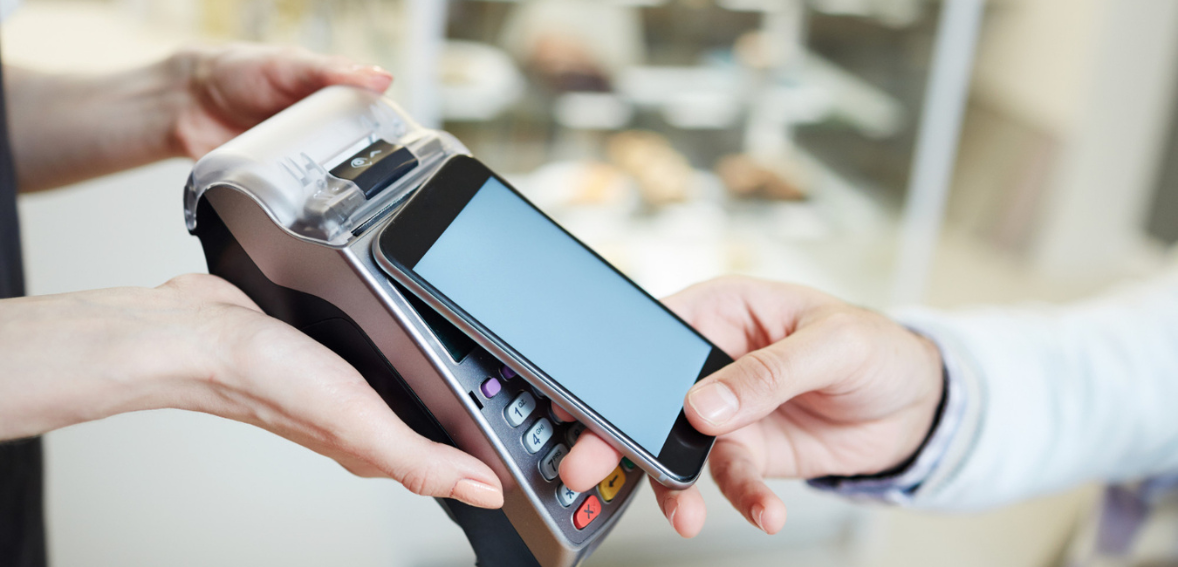
Modern bakery POS systems that support NFC contactless payments, including tap-to-pay cards and digital wallets like Apple Pay and Google Pay, dramatically reduce transaction time for the majority of customers who use these methods. For bakeries with a high proportion of small-ticket, quick transactions, contactless payment processing is not a luxury feature but an operational necessity.
Payment processing features that need evaluation should also include the possibility of separating payments into cash and credit card options, as some clients demand; and the ability to pay for the balance of an order after it has been customized and delivered to the client who had placed a deposit on the same previously in another transaction.
The function of partial payments and collecting balance is an essential part of bakery operations where deposits have been paid for custom orders. It is a task that needs to be done with consistency in every system but unfortunately is not always achieved, with some doing it seamlessly, while others use awkward alternatives that can easily lead to problems during the peak time at the pickup counter.
Inventory Management and Production Planning
The inventory and production planning capabilities of a bakery POS system deserve extended attention because this is the area where the difference between a system designed for bakeries and a generic system is most pronounced and most consequential for daily operations.
A bakery lives or dies on its ability to produce the right amount of the right things each day, and the information needed to make those production decisions comes from sales history that only a well-configured POS system can provide in the right format. Sales history by item, by day of week, by time of day, and by season gives a production manager or owner the data needed to calibrate production quantities to actual demand patterns rather than guessing or relying on memory.
The bakery billing software which creates such reports automatically and in a way that makes sense and leads to action helps prevent food wastage, ensures no shortages of the high-demand products, and increases the margins of the business through optimization of expenses. Recipe management is a more advanced option that not all bakery POS systems have, yet it brings great benefits to bakeries running large menus with many different SKUs. When every SKU within the system has a connected recipe containing the list of ingredients and the amount used for its creation, the system can automatically determine how many units of ingredients have been used according to the number of sales.
This saves considerable time as there is no need to perform labor-intensive calculations manually, and it also offers far more reliable results compared to traditional manual inventory counting. For bakeries where the cost of ingredients plays a vital role in making a profit, having such an integrated inventory management system can prove to be quite valuable.
Custom Order Management for Celebration Cakes and Special Items
For most bakeries, custom orders represent a disproportionate share of revenue relative to their proportion of transaction volume, because celebration cakes, wedding cakes, and specialty items command prices that reflect their complexity and the skill involved in making them. Managing these orders well is therefore not just an operational concern but a revenue protection concern, because errors in custom order management, whether a missed delivery date, an incorrect flavor, or a lost order record, have outsized consequences for customer relationships and the business’s reputation.
The best POS for bakery custom order management provides a structured order entry workflow that captures every relevant detail, including the customer’s name and contact information, the specific item being ordered, all flavor and decoration specifications, the requested pickup or delivery date, the agreed price, the deposit amount collected, and the balance due. This information should be stored in a way that is retrievable by date, by customer name, and by order status, so that upcoming orders can be reviewed in advance of their production requirements and nothing falls through the cracks during a busy period.
Notification or reminder functionality that alerts staff when a custom order’s production lead time has been reached, so that a wedding cake ordered three weeks ago appears on the production list at the right point rather than only being noticed when the customer calls to confirm, is a feature that pays for itself the first time it prevents a missed order. Automated deposit and balance tracking ensures that the financial side of custom orders is managed accurately without requiring manual reconciliation of which orders have been paid and which balances are outstanding.
Integration With Online Ordering and Delivery
The bakery business model has expanded significantly in recent years to include online ordering for both in-store pickup and delivery, and the best POS for bakery operations in the current environment needs to handle these channels as part of an integrated system rather than as separate workflows that require manual bridging.
A bakery with a strong online ordering presence whose POS does not integrate with the ordering platform faces the same fragmentation problems that any omnichannel retail business faces without integration: orders arriving on a separate device or screen that need to be manually entered into the POS, inventory that does not update across channels in real time, and reporting that requires manual compilation from multiple sources to produce a complete picture of the day’s activity.
Bakery billing software, which connects directly to your online ordering system either by a native function or via a third-party software integration, makes orders placed on your website go straight into the billing system used for in-store sales, maintains inventory levels automatically, and is included in the reports along with the rest of the orders. Such integrations become critical for bakeries who run large amounts of advance ordering operations because there will be so many orders placed online during busy hours that manual handling cannot be done accurately under pressure. If the bakery offers delivery services for their custom-made orders or daily orders, then delivery management integration enables logistics tracking without having to use any other delivery management software.

Reporting and Financial Visibility
The reporting capabilities of a bakery POS system determine how clearly you can see what is actually happening in your business and how effectively you can use that information to make better decisions. Payment processing bakery operations generate a significant volume of transactions across a relatively small number of product categories, and the reporting tools that make sense of that data should give you visibility into sales by item, by category, by time period, and by channel, as well as cost and margin information that tells you which products are actually contributing to profitability rather than simply generating revenue.
End-of-day reporting is the foundation that every owner needs for basic financial management, including total sales, payment method breakdown, and comparison to the same day in prior weeks or the prior month.
Trend reporting over extended periods uncovers the seasonal trends and changes in demand, which in turn guide production planning, staff planning, and product development. Waste reporting, where available in your system, gives you the information on the cost of waste items and helps you use this information to gradually decrease waste, which happens as a result of proper production planning.
Item-level margin reporting, where available in your system, necessitates having your recipe costs linked to your sales data. But where bakeries have invested in this capability, item-level profit margin visibility, in contrast to item-level sales data, is perhaps the most useful insight available in your reporting system, as it is able to consistently show that the most profitable products may not necessarily be those your team thinks are the most profitable.
Ease of Use and Staff Training Considerations
A bakery POS system that is technically excellent but difficult to use in practice will not deliver its potential value because staff will use it inconsistently, avoid its more complex features, and develop workarounds that reintroduce the manual processes and errors the system was meant to eliminate. The usability of a system matters as much as its feature set, and this is particularly true in bakery environments where staff may be managing the service counter under genuine time pressure during busy periods and where high turnover in hourly positions means the system needs to be trainable quickly without extensive prior experience.
Evaluating usability requires actually using the system rather than watching a demonstration, which is why most reputable bakery billing software providers offer free trials or demo access that allows you to work through realistic scenarios before committing.
Key usability factors to assess include how quickly a typical transaction can be completed from item selection to payment processing, how intuitive the custom order entry flow is for someone who has not used the system before, how clearly inventory and order status information is presented on the staff-facing interface, and how easily managers can access the reporting functions they need without navigating complex menus.
Hardware considerations are also part of the usability equation, including the size and clarity of the customer-facing display, the reliability of the receipt printer, and whether the terminal footprint fits comfortably on your counter without displacing other operational necessities. For bakeries with limited counter space, the physical dimensions and cable management requirements of the hardware setup matter in ways that are easy to overlook during a software evaluation but become daily irritants once the system is installed.
Pricing Models and Total Cost of Ownership
The cost of a bakery POS system is not simply the monthly subscription or the hardware purchase price. It is the total cost of ownership across the life of the system, including payment processing fees, which can be the largest ongoing cost component for high-volume bakeries, and the cost of add-on modules for features like online ordering integration, loyalty programs, and advanced reporting that may not be included in the base price. Understanding the full cost picture before committing to a system prevents the unpleasant experience of discovering that the affordable-looking base plan does not include the features that are actually essential for your operation.
The rates for payment processing services are greatly different among POS vendors, and the discrepancy between one that offers two point six percent per transaction payment processing rate and one that offers two percent per transaction payment processing rate can make a huge difference annually for a bakery with card transactions worth fifty thousand dollars each month.
Looking at the rates of payment processing and software pricing together in order to choose one POS system over another is important since certain POS vendors include payment processing in their package offer at relatively low rates, while other vendors offer cheaper software pricing with expensive processing rates. Sometimes, the POS that is cheaper up front might not be the best choice, and a complete cost assessment based on the estimated software, hardware, and processing costs for a period of two to three years is more effective than monthly subscription rates.
Conclusion
Choosing the right bakery POS system is one of the most consequential operational decisions a bakery owner makes, because it shapes the efficiency, accuracy, and financial visibility of the business every single day. A bakery billing software that genuinely suits the operational reality of a bakery, handling custom orders gracefully, connecting production planning to sales data, processing payments quickly during the morning rush, and reporting clearly on what is actually driving profitability, creates a foundation that supports growth and informed decision-making.
Payment processing bakery businesses need is not just about taking cards at the counter. It is about building an integrated operational system that reduces the manual work, the guesswork, and the errors that consume time and erode margins in businesses that run without it.
Taking the time to evaluate options against the specific requirements of bakery operations, testing the systems you are considering seriously rather than making decisions based on price and marketing materials alone, and choosing a partner whose pricing model, support quality, and product roadmap align with where your business is heading will consistently produce a better outcome than the shortcut of defaulting to whatever is most familiar or most prominently advertised. The right system, chosen carefully and configured properly, pays its costs many times over in the operational clarity and efficiency it delivers every day your bakery is open.