
By Bella Zhang June 4, 2026
The bakery business has always been about more than what happens inside the shop. Special orders placed by phone, wedding cake deposits collected at consultations, wholesale accounts invoiced monthly, farmers market sales completed with a square reader, and now the digital ordering channels that have become a standard expectation for food businesses of every kind have all created payment moments that happen outside the traditional counter transaction.
Bakeries that grew up around the single transaction type of in-person counter sales are finding that their current payment infrastructure, optimized for that single transaction type, creates friction at every other payment moment their business now involves.
Omnichannel bakery payments is the operational framework that addresses this multi-channel reality by creating connected payment infrastructure that handles counter sales, online orders, delivery payments, custom order deposits, and wholesale invoicing through a coherent system rather than through disconnected tools that require separate management, separate reconciliation, and separate reporting.
Online order payment bakery operations need is not simply adding an online checkout to an existing system. It is building the payment architecture that makes every revenue channel of the bakery operate on the same underlying payment infrastructure so that what a customer pays online is visible in the same system where counter sales are tracked, so that inventory depletion from an online order updates the same stock records that in-store sales affect, and so that financial reporting across the full business reflects all revenue rather than requiring manual compilation from separate systems.
Bakery ecommerce payments and in-store payments that share a common infrastructure produce operational clarity that disconnected systems cannot approach, and the investment in building that integration pays returns across every dimension of how the bakery is managed.
The Multi-Channel Payment Reality for Modern Bakeries
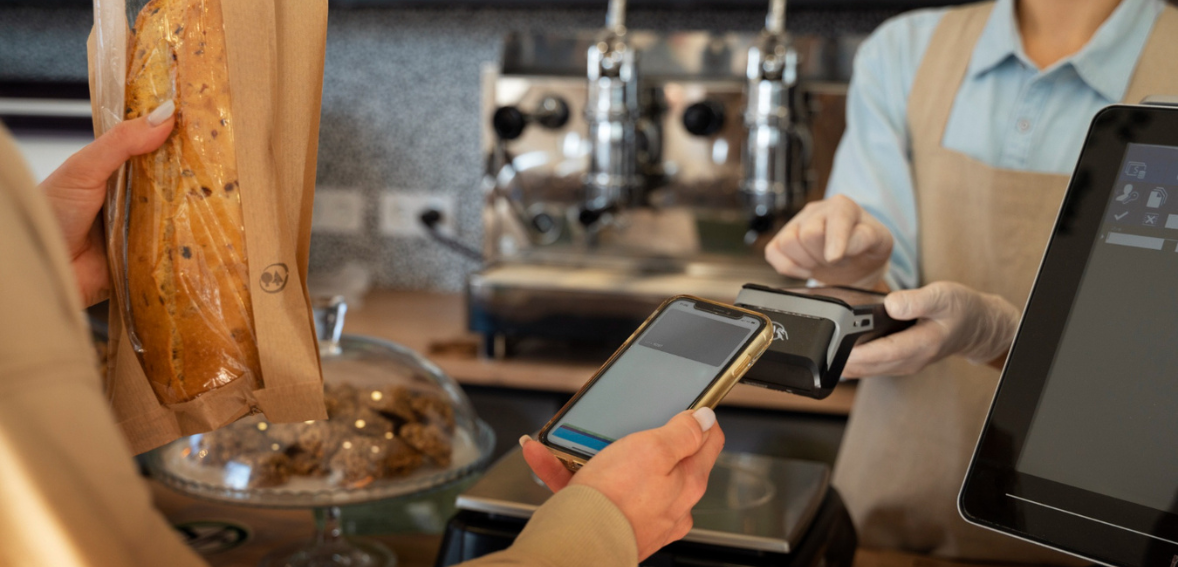
Bakeries operating in today’s market are managing more distinct revenue channels than at any previous point in the industry’s history, and each channel has its own payment timing, its own payment method mix, and its own reconciliation requirements that create administrative complexity when handled through separate tools. The counter transaction remains the highest-frequency channel for most bakeries, where customers order and pay in real time through the POS system in a transaction that is immediate and complete before the customer leaves the counter.
Online pre-orders through the bakery’s website or a third-party ordering platform represent a growing channel where payment is collected at the time of order, often days before the customer arrives to collect, creating a timing difference between payment receipt and product delivery that requires specific handling in both the payment system and the inventory management workflow. Delivery orders processed through first-party or third-party delivery platforms involve payment collection by the platform, settlement to the bakery on a periodic basis, and often a commission or service fee that must be accounted for in the revenue reconciliation.
Custom order deposits collected at the time of order for wedding cakes, celebration cakes, and other made-to-order items require a payment system that can collect partial payment at one time and the balance at another, with the ability to connect both payments to the same order record. Wholesale account billing for bakeries supplying cafes, restaurants, or corporate clients typically involves invoice-based payment with net terms that are entirely different from the immediate payment structure of consumer transactions.
Integrated POS bakery systems that handle all of these channel types within a single payment platform eliminate the administrative overhead of managing each channel separately and produce the unified financial reporting that running a multi-channel bakery business requires.
In-Store POS as the Foundation
The in-store POS system is the operational hub around which all other payment channels should connect, because it is the highest-frequency transaction environment and the system that is most thoroughly integrated with the bakery’s daily production and customer service operations.
Integrated POS bakery configuration that serves as the foundation of omnichannel payment infrastructure must handle the full range of in-store transaction types beyond simple counter sales, including custom order deposits and balance collections, gift card sales and redemptions, loyalty program enrollment and point redemption, split payments where a customer pays part of their balance with a gift card and the remainder with a card, and the various promotional pricing and discount scenarios that bakery customer service frequently involves.
Modern bakery POS systems from providers including Square, Clover, Lightspeed, and Toast each offer integration capabilities that make them more or less appropriate as the hub of a multi-channel payment architecture depending on the specific online ordering, delivery, and wholesale tools the bakery uses in its other channels. Evaluating the POS as the foundation of omnichannel bakery payments requires assessing its integration partner ecosystem at least as carefully as its standalone functionality, because the value of the foundation depends on the quality of the connections it can establish with the other revenue channels rather than on its performance as an isolated in-store tool.
Online Ordering and Pre-Payment Integration
Bakery ecommerce payments processed through the bakery’s own website or through integrated ordering platforms need to connect with the in-store POS system in ways that create operational continuity rather than parallel systems that both capture revenue without sharing information. The ideal integration between online ordering and the in-store POS means that an online order placed by a customer appears in the kitchen production queue automatically, reduces the available inventory for the ordered items, creates a customer record that connects the online order to any future in-store transactions, and settles through the same financial reporting that counter sales appear in without requiring manual import or reconciliation.
Integrations of order payment through online orders by bakeries that have reached such levels of connectivity would eliminate the need for a separate device or tablet where bakeries currently utilize to place orders online together with the primary POS used. When customers pay online for orders on the bakeries’ website, the payment process needs to be at par with the professional experience they receive when paying at the bakery store in person by accepting all modes of payment, including but not limited to credit and debit card payments as well as digital wallet payments.
Omnichannel payment by the bakery will mean that a customer who made purchases at the bakeries in-store and online is treated as one and the same customer in both places, allowing for loyalty recognition and personalized interaction between the bakery and customer.
Delivery Platform Integration and Financial Reconciliation
Third-party delivery platforms including DoorDash, Uber Eats, and Grubhub have become revenue channels for many bakeries that offer delivery as a service, and the financial reconciliation of delivery platform revenue is one of the most consistently challenging administrative tasks in multi-channel bakery operations. Each platform collects payment from the customer on behalf of the bakery, deducts a commission that typically ranges from fifteen to thirty percent of the order value, and settles the net amount to the bakery on a weekly or bi-weekly basis in a format that requires reconciliation against the orders completed during the settlement period.
Payment processes for bakery e-commerce transactions using delivery platforms that are not integrated with the primary POS system lead to reconciliation difficulties in which the finance department is required to reconcile the transaction data between the platform’s reporting and the orders placed to get the reconciled financials into the accounts department, an activity that is labor-intensive and prone to errors when the volume of the transactions is high.
POS systems that are integrated with major delivery platforms and certified for integration, the financial data regarding the transactions including the order details and delivery charges are automatically imported into the POS system, giving an overall financial statement that includes revenue generated through delivery platforms together with all other revenues without any reconciliation needed. Management of the menu by delivery platforms is also considered when integrating with delivery platforms since, when a bakery runs its menus independently on the delivery platform, there may be problems in the availability of the items.
Custom Order Deposits and Payment Plans
Custom orders represent a significant revenue category for many bakeries, and the payment workflow for custom orders is structurally different from standard transaction types in ways that require specific capabilities from the payment system rather than workarounds that create administrative complexity. Omnichannel bakery payments for custom orders typically involve a deposit at the time the order is placed, often fifty percent of the total order value, with the balance collected at pickup or delivery.
The payment system used for custom order management needs to create a connected order record that shows the deposit collected, the balance outstanding, the order details and specifications, and the production timeline, and needs to provide a simple mechanism for collecting the balance payment at a later date without requiring the customer to re-enter their payment information or the staff to reconstruct the order details from a separate system.
Integrated POS bakery platforms that include custom order management functionality handle these workflows natively, creating the order record at the time the deposit is collected and making the balance collection a straightforward lookup and completion rather than a separate transaction that requires manual matching to the original order.
The customer experience of custom order payment is an important brand touchpoint for bakeries where custom cakes and celebration items represent premium price points and high-trust client relationships, and payment systems that make this workflow smooth and professional communicate the same quality standards as the baked product itself.
Wholesale and B2B Payment Management
In cases where bakeries offer products to other food establishments through wholesale accounts, they employ a B2B payment process that is completely distinct from consumer transaction management through POS systems that use invoice billing, net payments, inconsistent order schedules, and account management which consumer POS systems lack.
Online order payment processes for bakery B2B orders entail employing POS software that has invoicing capabilities, an additional invoicing software solution that is integrated into the primary POS for financial recording purposes, or an integrated solution in which order and delivery details are recorded in the production software while accounting for financial transactions using a B2B payment process.
Payment solutions used for wholesale bakery order processing include ACH bank transfers, business credit cards, and checks which are less common in the B2B payment environment when compared to consumer payments made by cashiers using card-present and mobile wallets during the purchasing process. E-commerce payments made by wholesale accounts in which orders can be placed in a dedicated B2B portal that creates and keeps records of transactions, provide the convenience that the wholesale market demands without incurring the cost of administering accounts via emails and calls.
Conclusion
Multi-channel payment integration is the operational infrastructure that allows modern bakeries to operate coherently across all of the revenue channels their business now involves without the administrative overhead of managing each channel separately. Omnichannel bakery payments built on a POS foundation that connects with online ordering, delivery platforms, custom order management, and wholesale invoicing create the unified financial visibility and operational efficiency that disconnected systems cannot approach.
Online order payment bakery integration that makes online orders visible in the same system where counter sales are tracked eliminates the dual-system management that creates operational friction during busy service periods. Integrated POS bakery platforms that handle the full range of transaction types from counter sales through delivery payments through custom order deposits produce the financial reporting clarity that multi-channel bakery management requires.
Bakery ecommerce payments and in-store payments that share a common infrastructure represent the operational foundation for a bakery business that serves its customers consistently and manages its finances clearly across every channel through which it generates revenue.